

Services
Transition risk management
One of the key prerequisites is the ability to assess the many divergent statements about the energy transition and to place them coherently within an overall picture. On the basis of leading modelling, combined with our outstanding know-how in the energy transition and in risk management, we offer you comprehensive support.
This covers the technical aspects of the technology transition and the resulting risks and opportunities.

The energy transition and its impact on business strategy
Highly probable developments and their effects on the economic environment
How fast is the transition progressing and what impact do the falling electricity generation costs (Levelized Cost of Energy LCOE) have on competitiveness. How long does it take to relocate production capacity and how far will the LCOE probably have fallen? How great are the current locational advantages (qualified staff, short distribution routes, etc.) versus future energy costs.

Opportunity & risk identification
Recognising opportunities as they open up, forward-looking management of emerging risks. For example, how large is the loss of revenue as a grid provider when customers manage their peak loads efficiently.
Reducing grid costs through the use of batteries and load management (peak shaving). Using electricity price fluctuations to lower electricity costs. How high is the earnings potential from using batteries to exploit electricity price differentials.

Scenario analyses
For example: the effects of energy price jumps, faster than expected development of other energy technologies such as nuclear fusion and their probabilities.
How quickly could other energy technologies such as nuclear fusion be available on a sufficient scale, what effects do jumps in CO2 pricing have, how far does trading in CO2 certificates provide relief. How strongly would 24/7 PV electricity prices of $ 20 / MWh in sun-rich countries change the market? How severely do energy price jumps affect earnings. What does energy price hedging cost and how does it have to be structured.

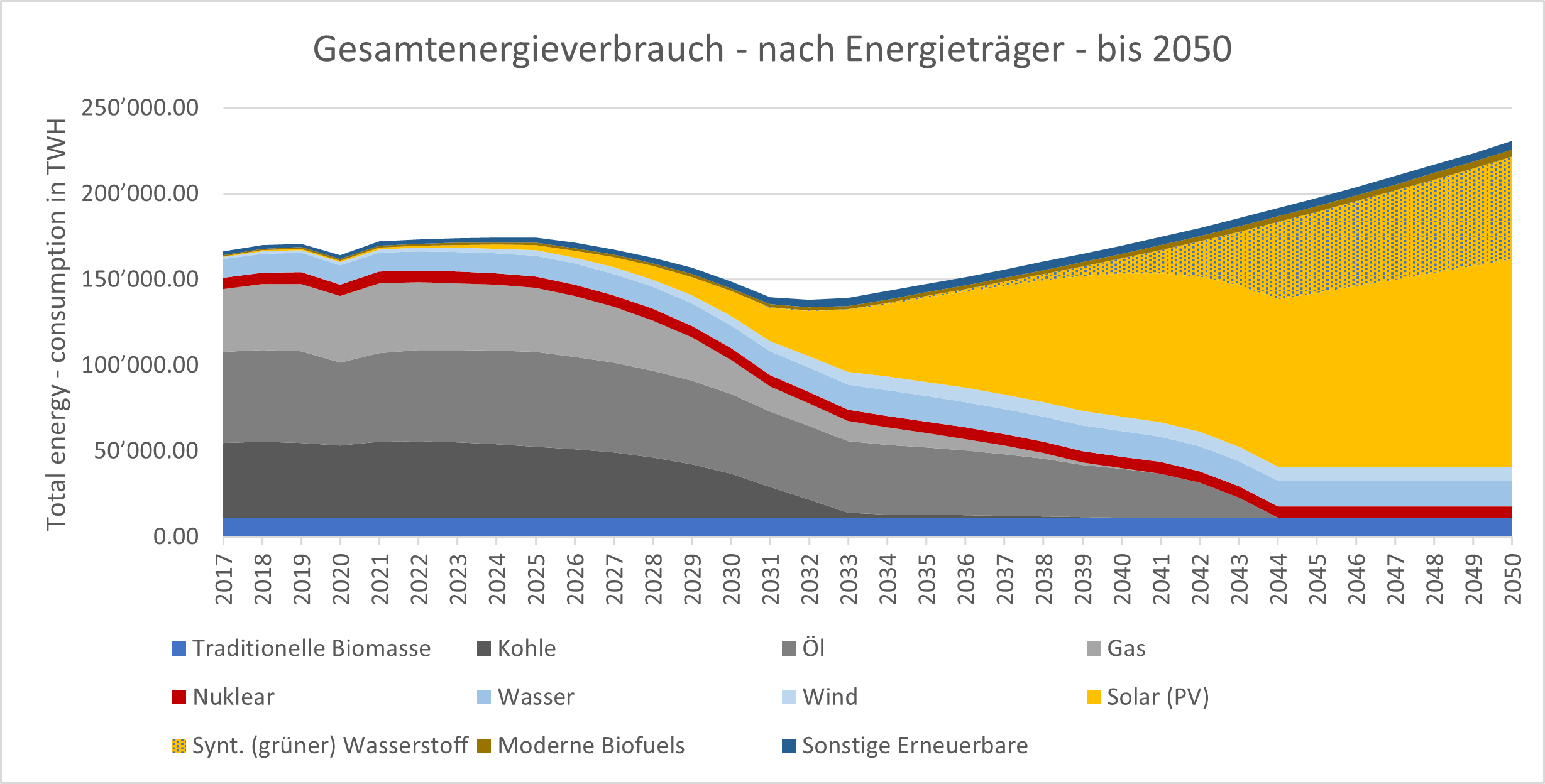
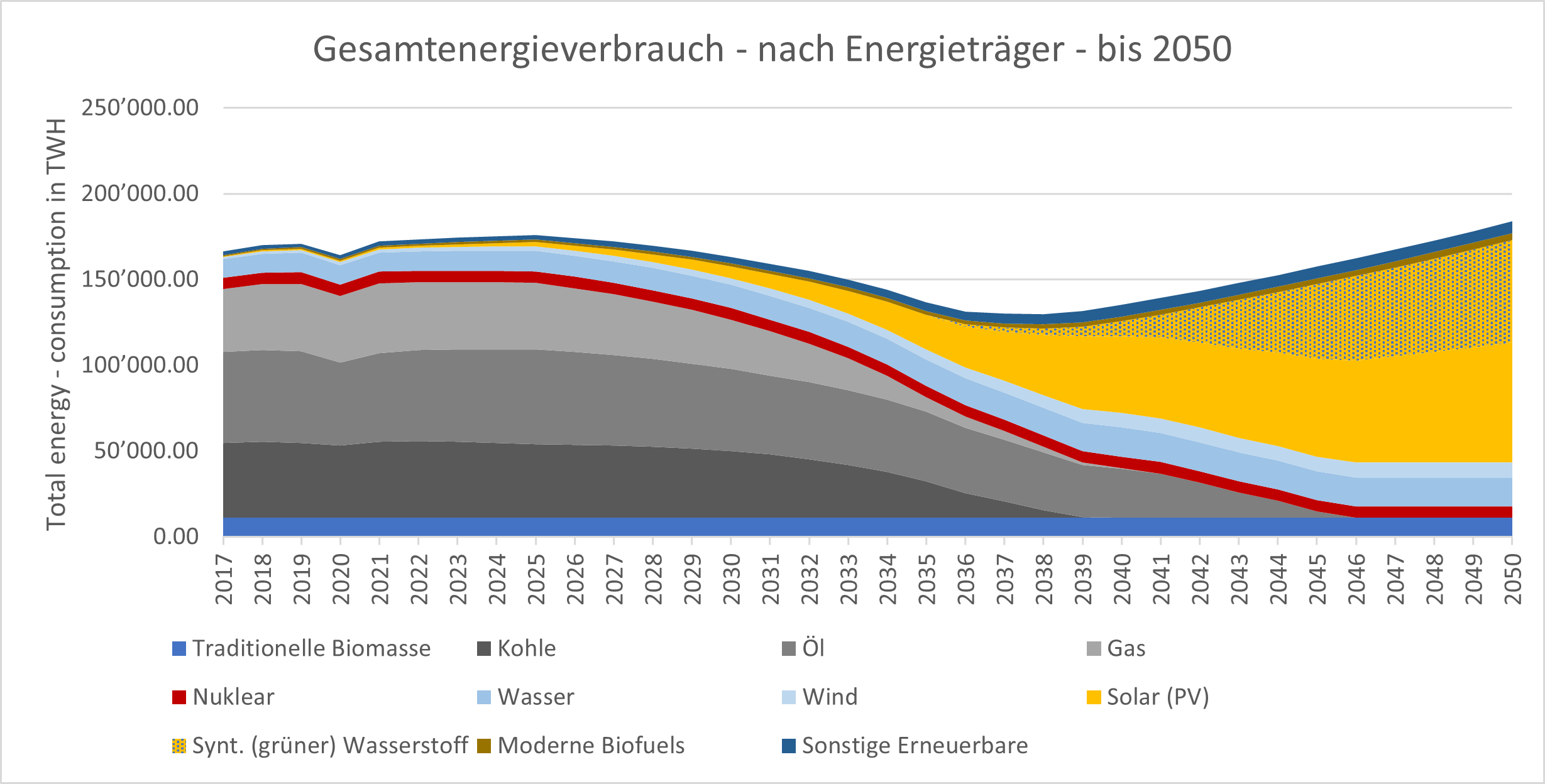
Image # Two scenarios: left – empirically based, right – effects of an immediate collapse in renewables. The growth rates fall to 2/3 of empirical growth. The shift of the transition into the future is clearly visible. Both the low (efficiency effects) and the switch to renewables are delayed.